Measure Google Tag Manager Event Duration

Google Tag Manager is a great tool. Yeah, you came all the way to this article to read that truism. It also performs really well, loading at a sweet, swift pace even on a slow connection, thanks to pretty decent response times from Google servers. On top of that, the library itself loads asynchronously, meaning the container download doesn’t interrupt the browser as it tries to make sense of your messy HTML.

Read More…
Track Content Engagement via GTM

When looking at Google Analytics reports, you’d think you get a pretty good idea of how people are interacting with your site, right? I mean, you’re tracking events here, pageviews there, and user timings, custom dimensions, custom metrics, and calculated metrics are all part of your daily lingo. But you’re also probably aware of how futile this tracking is. After all, all you’re seeing are numbers that reflect certain outcomes the visitors have produced on the website, and how these outcomes match against your preconceived goals and objectives, right? It’s difficult to wrap your head around the individual use cases that constantly take place on the site, and to draw overarching conclusions or unearth business trends on the basis of these data sets can be very problematic indeed.

Read More…

Form Field Timing With Google Tag Manager

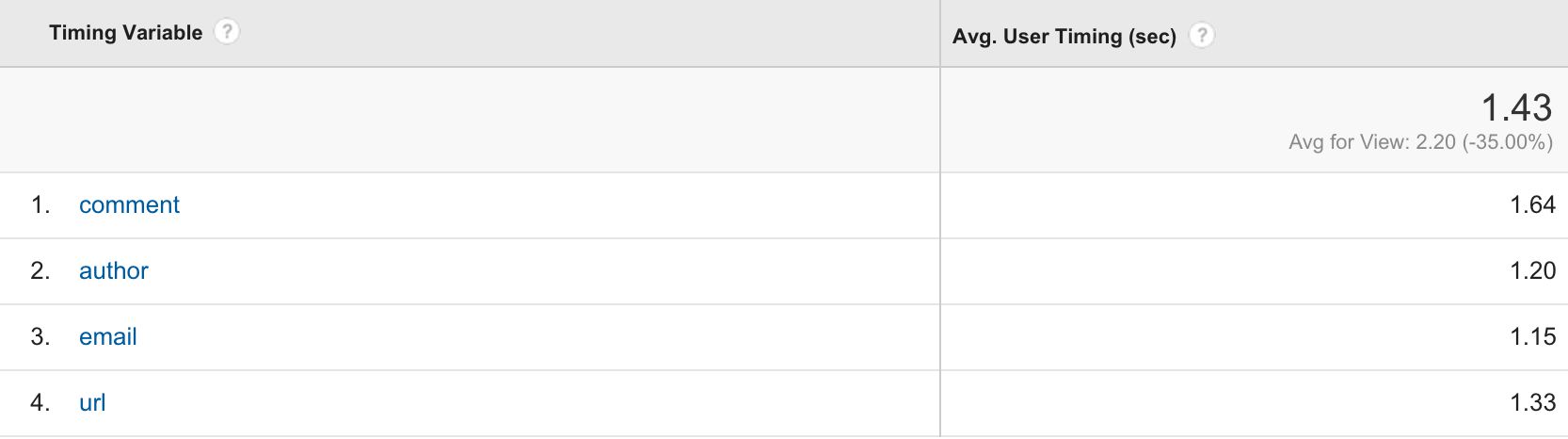
The inimitable Craig Sullivan gave me an idea for a continuation to my latest post on form abandonment tracking. In this short tutorial, I’ll show you how to track the time users spend on your form fields. We’re going to use the User Timings hit type, and we’ll send the data for just one form. With small modifications, you can expand the script to cover multiple forms on a page.

This simple solution tracks the time the user spends on each form field by measuring the distance between the focus event and the blur or change event. The first one occurs when a form field is entered, and the latter depends on if a value changed (change) or no change was registered (blur).

Read More…