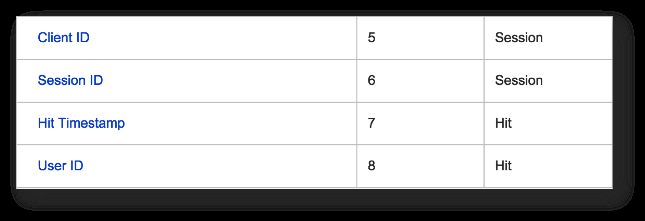
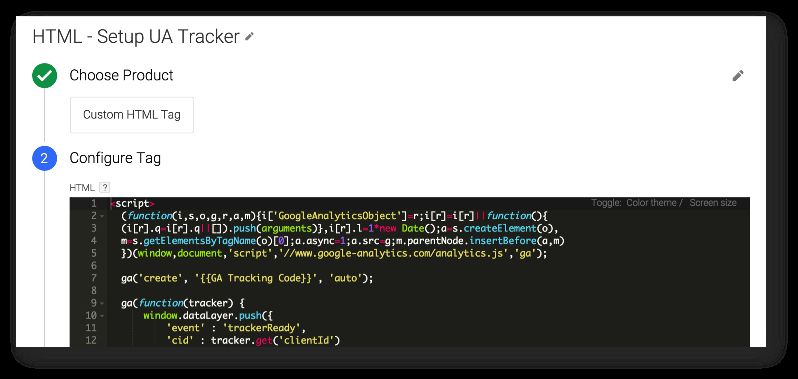
If you read my previous post on fetching the Client ID from the Universal Analytics tracker object with Google Tag Manager, you might have agreed with me that it sucks you can’t access the tracker object interface in real time using Google Tag Manager. This is because all …
Since writing my rant about the schema conspiracy of web analytics platforms, I’ve been giving the whole idea of hit-level data collection a lot of thought. Sessionization is very heavily implemented in Google Analytics, which is understandable, but the regular Google …

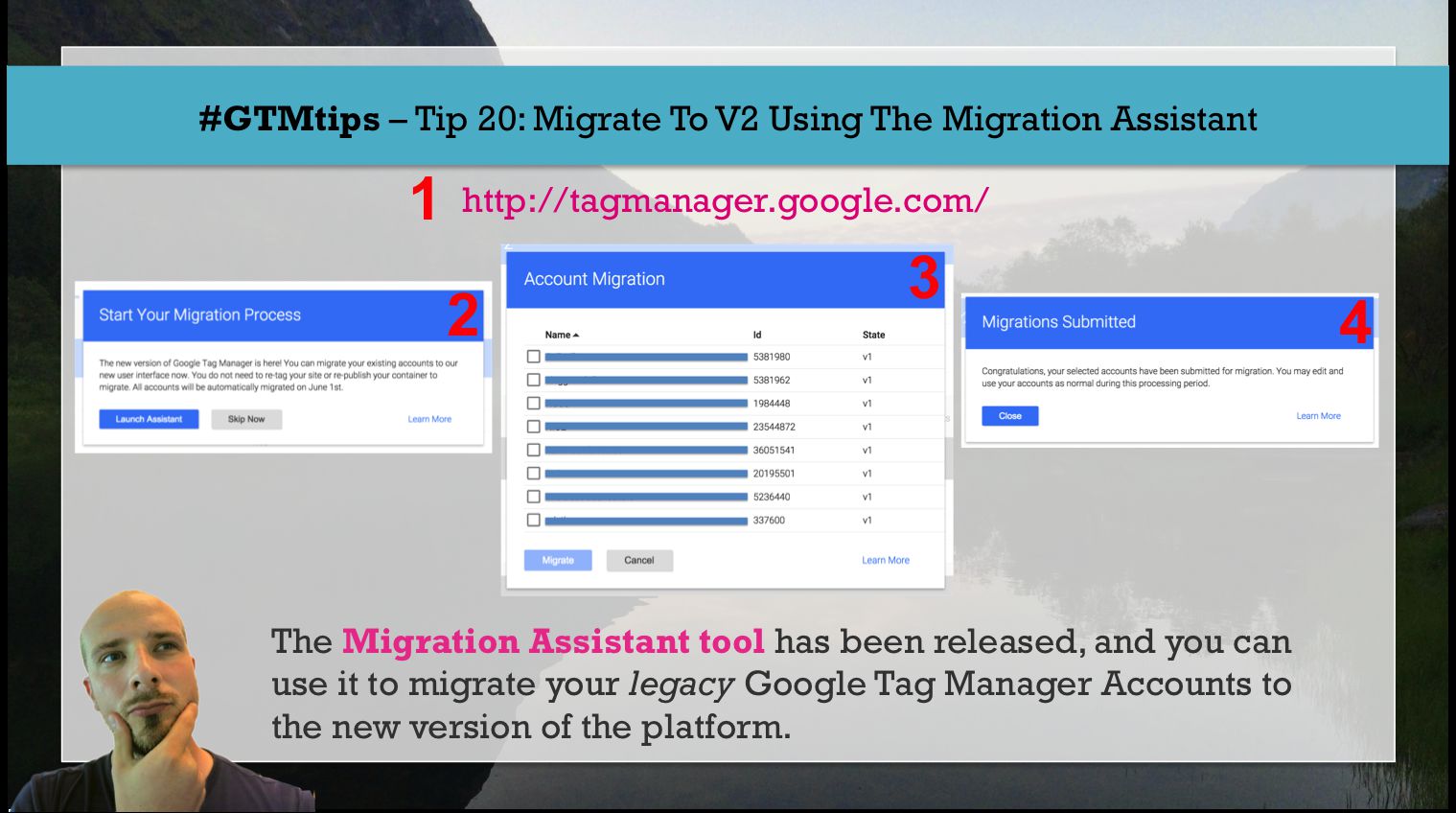
On March 30th, right on (the latest) schedule, the Migration Assistant tool was published for Google Tag Manager V2. This tool lets you opt-in to account migration for your legacy Google Tag Manager Accounts. Migration means simply that the accounts will be converted to V2 …

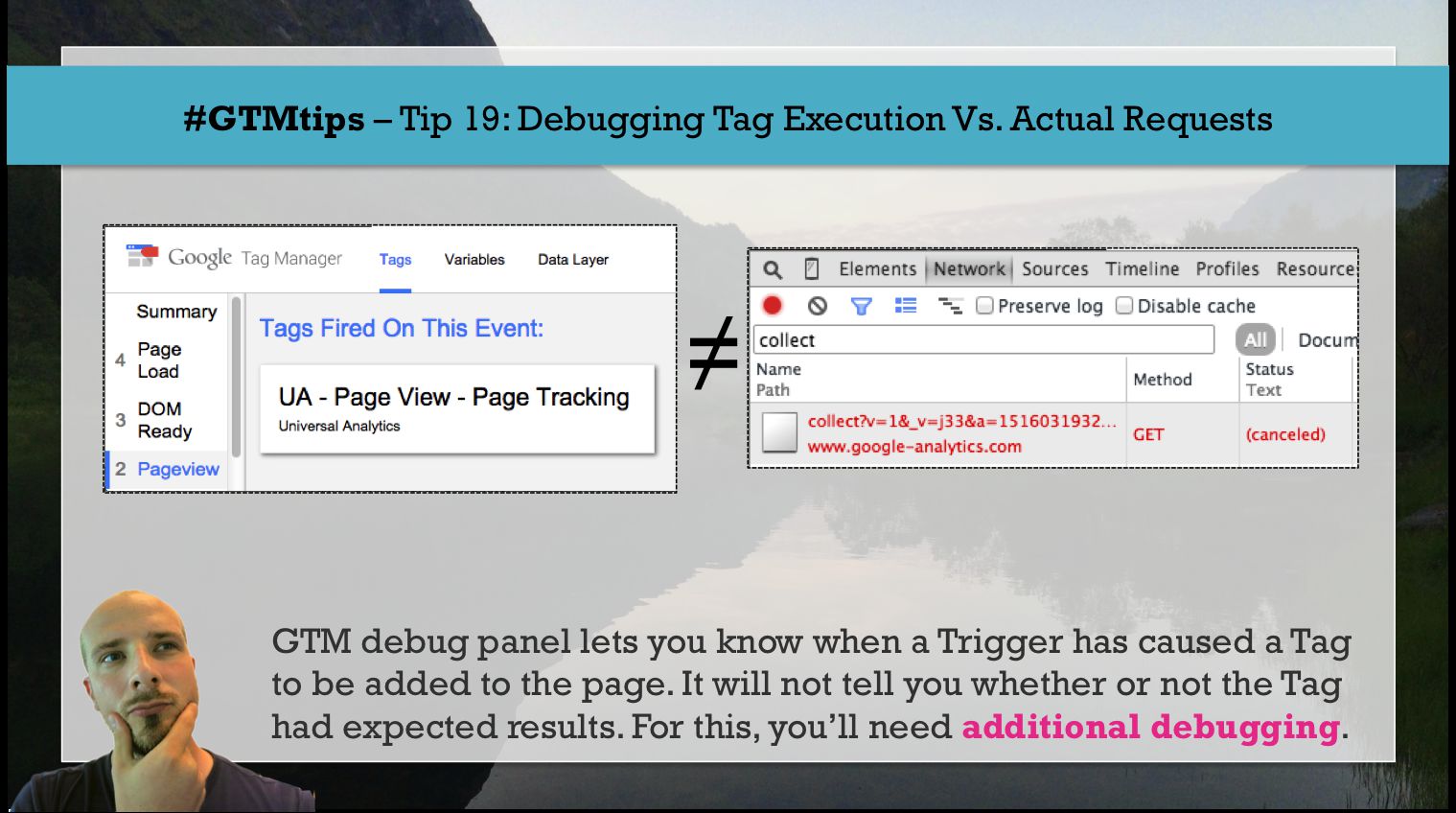
One of the unfortunate misunderstandings regarding the wonderful Google Tag Manager Preview mode is what it actually means when GTM reports “Tags Fired On This Event”. For many, this seems to indicate that whatever code the Tag was meant to execute also completed …

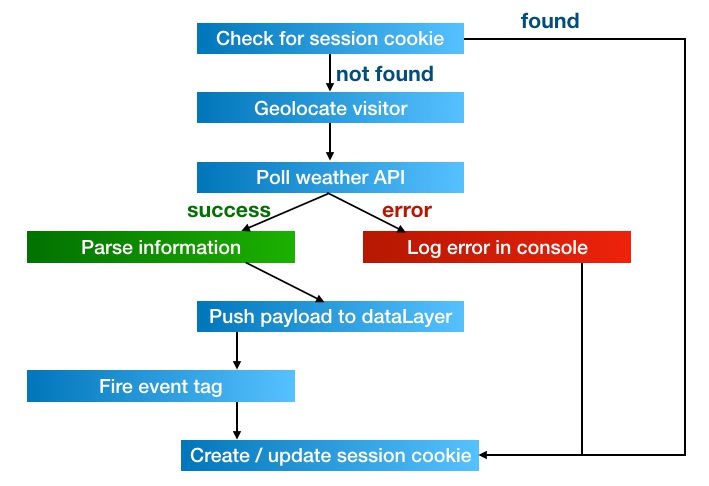
In 2013, I wrote a guide for Universal Analytics and Google Tag Manager on how to poll for weather conditions, and send this information to Google Analytics as a custom dimension of the session. The guide was intended as a technical introduction to Google Tag Manager, and I think …

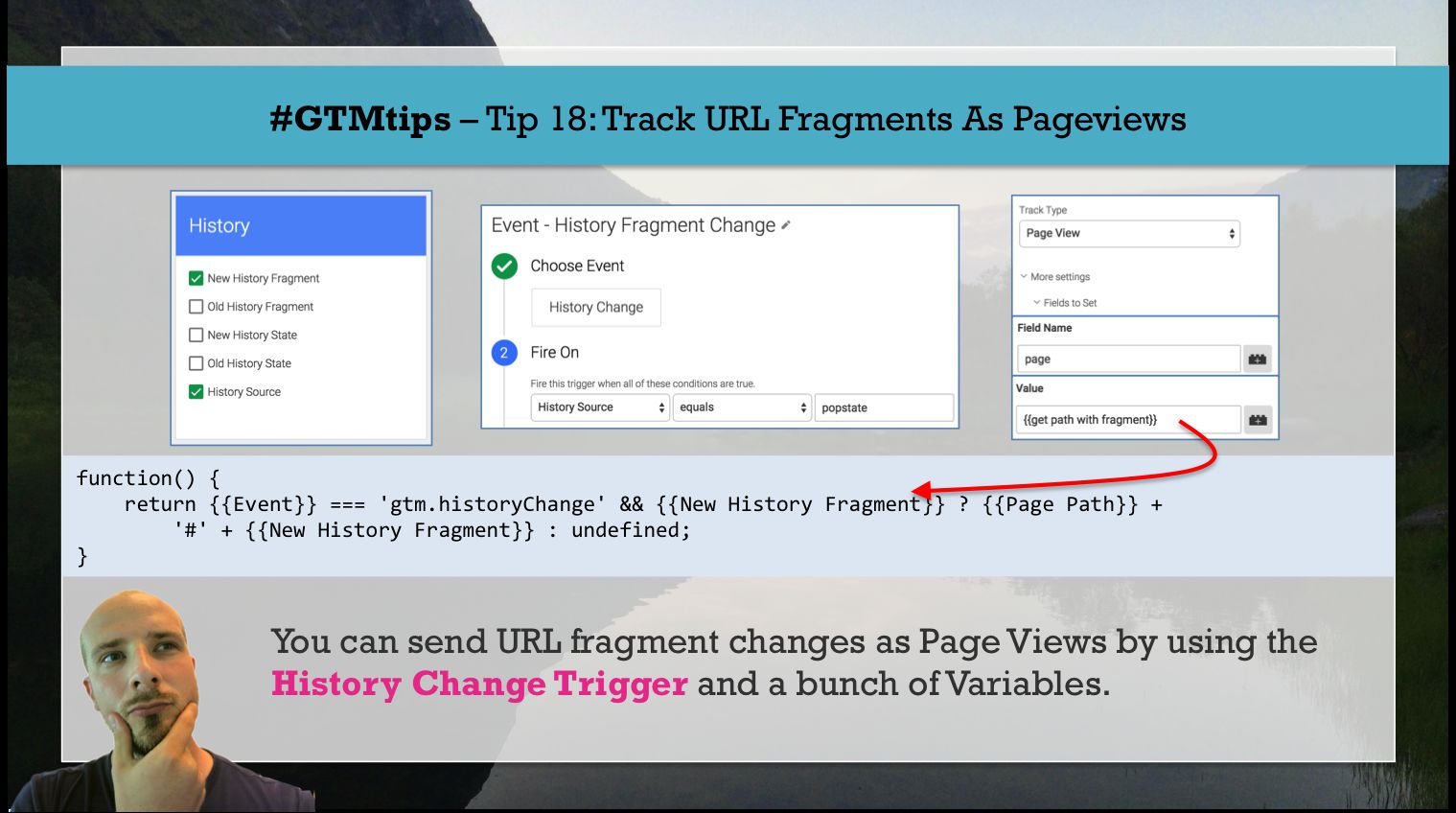
(Updated 15 July 2015: Added a huge simplification. Jump straight to the update at the end.) URL fragments are strings of characters that follow a hash mark (#) in the URL. Typically, they are used for anchor links, where following a link keeps you on the same page but jumps the …

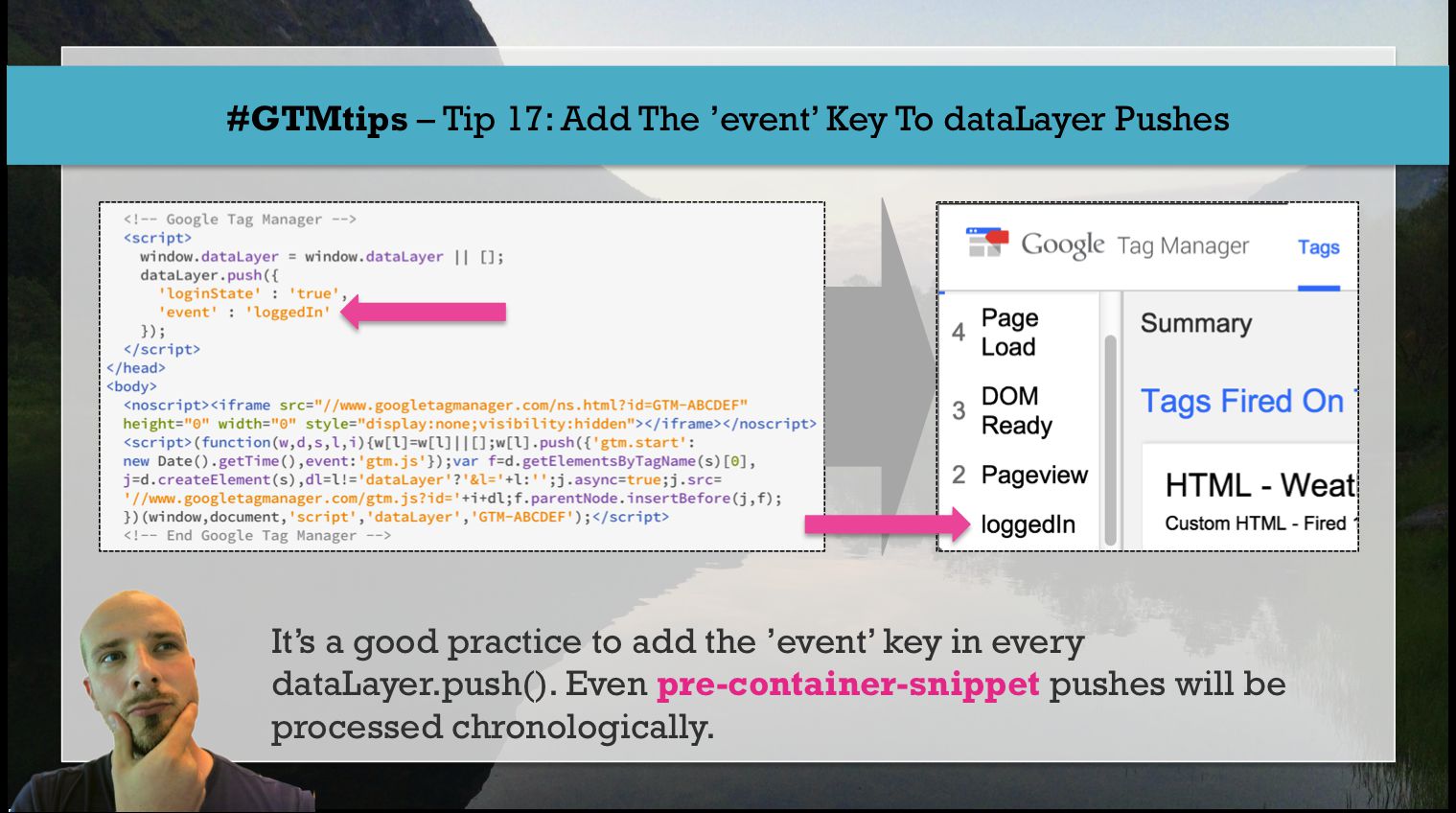
In Google Tag Manager, every single Tag requires a Trigger to fire. Every single Trigger requires an Event condition to activate. Sometimes, these Event conditions are obfuscated under template semantics, but you can also create a Custom Event Trigger, where you specify the value …