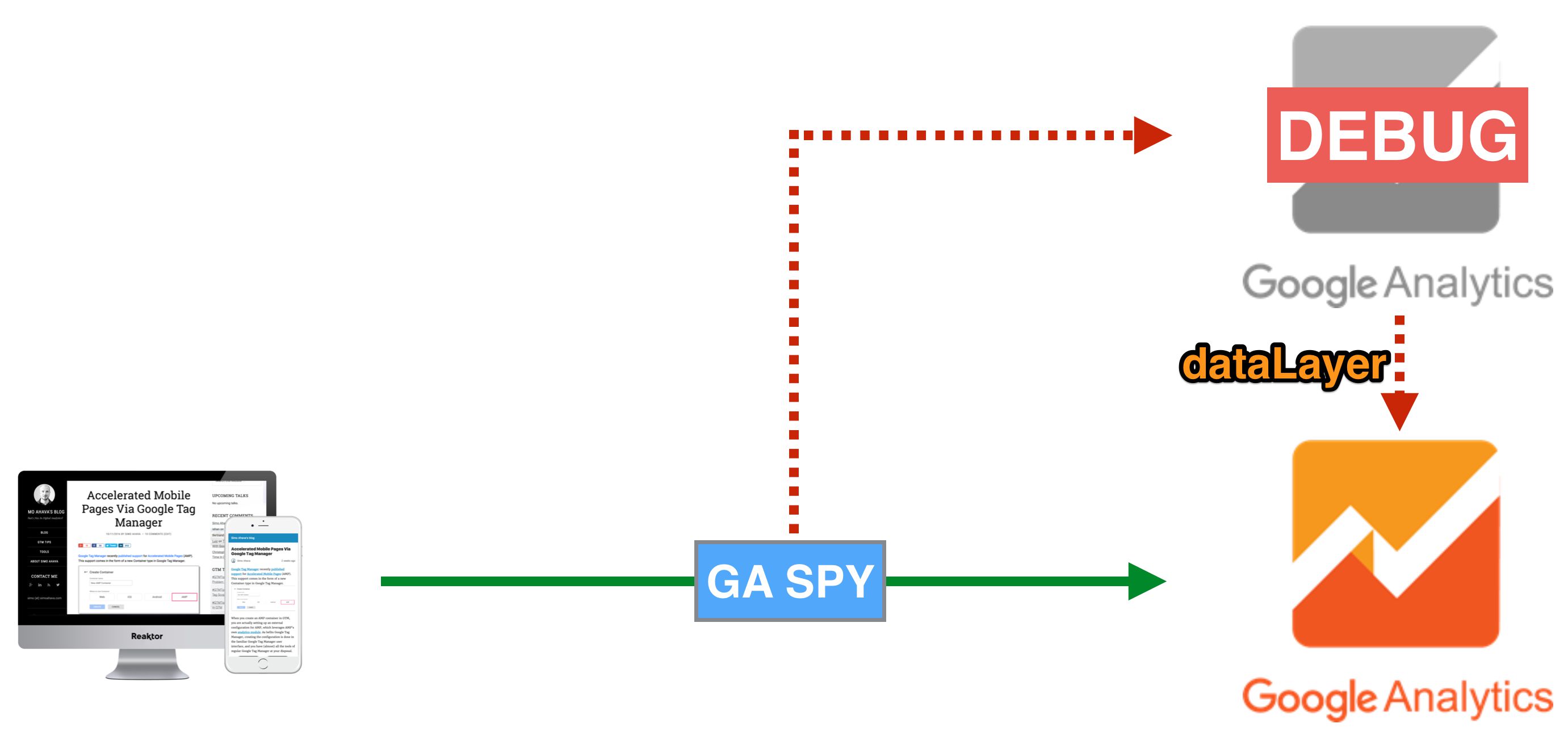
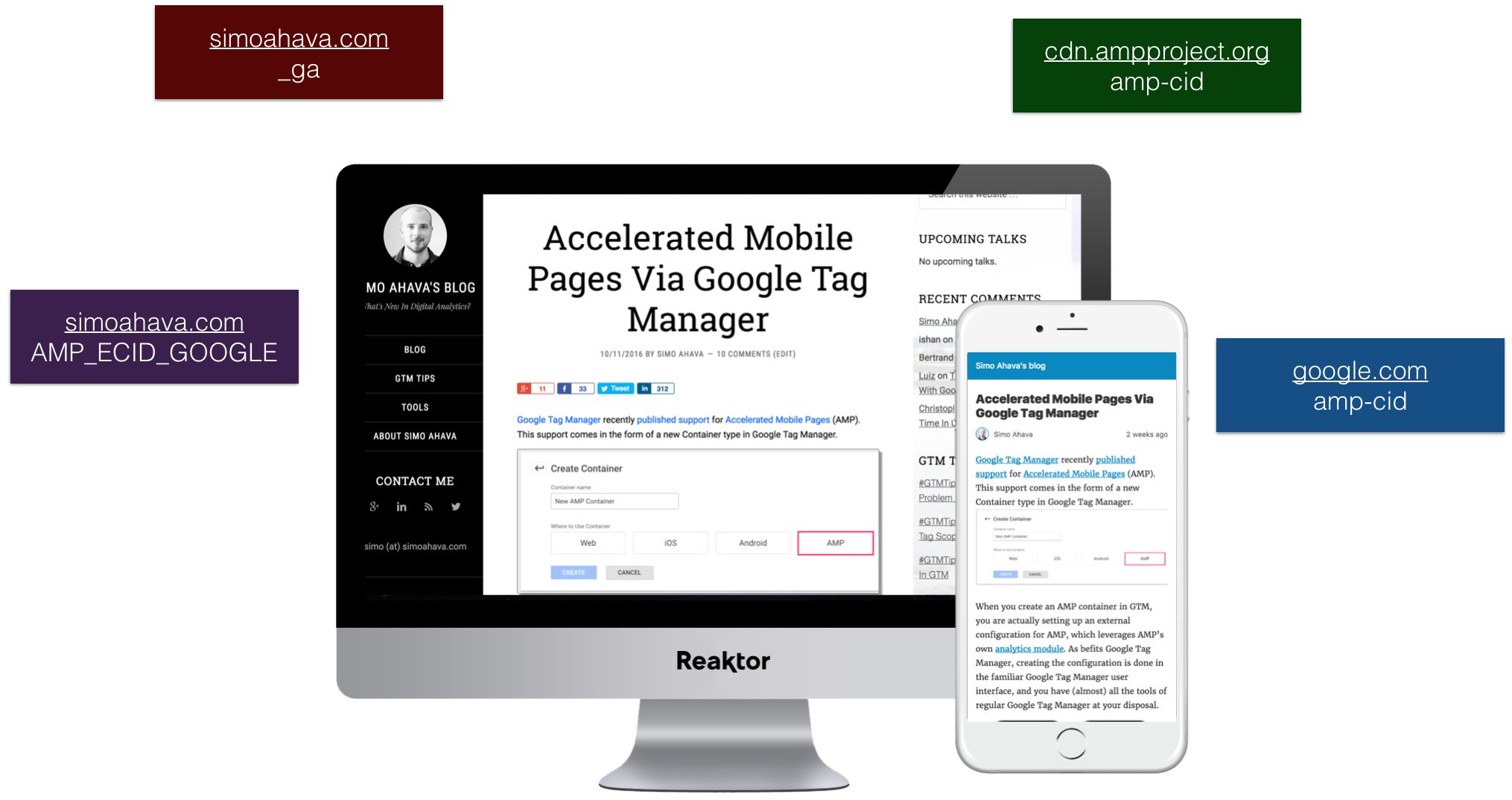
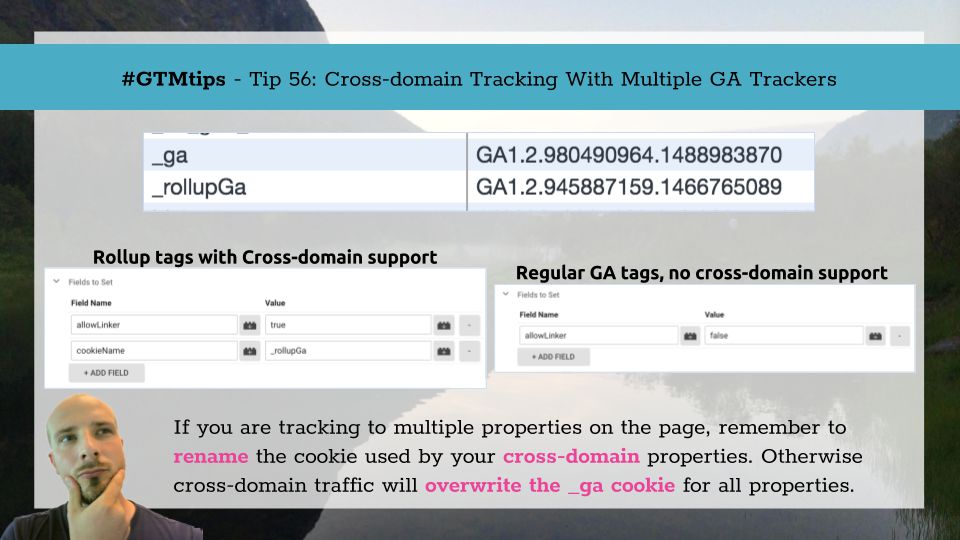
To be fair, this tip isn’t just for Google Tag Manager but for regular old on-page Google Analytics as well. It’s one of those little things that’s corroding your data quality without you ever realizing it. Namely, this tip is about how to handle cross-domain …
READ THIS (26 Aug 2019)!! Unfortunately, the update I made in 2016 contained code that was incomplete and broken. I nevert noticed this until it was pointed out to me almost three years later. At this point, I don’t have a working backup of the solution, so unless some …

This article is a collaboration between Simo and Dan Wilkerson. Dan’s one of the smartest analytics developers out there, and he’s already contributed a great #GTMTips guest post. It’s great to have him back here sharing his insight on working with Accelerated …

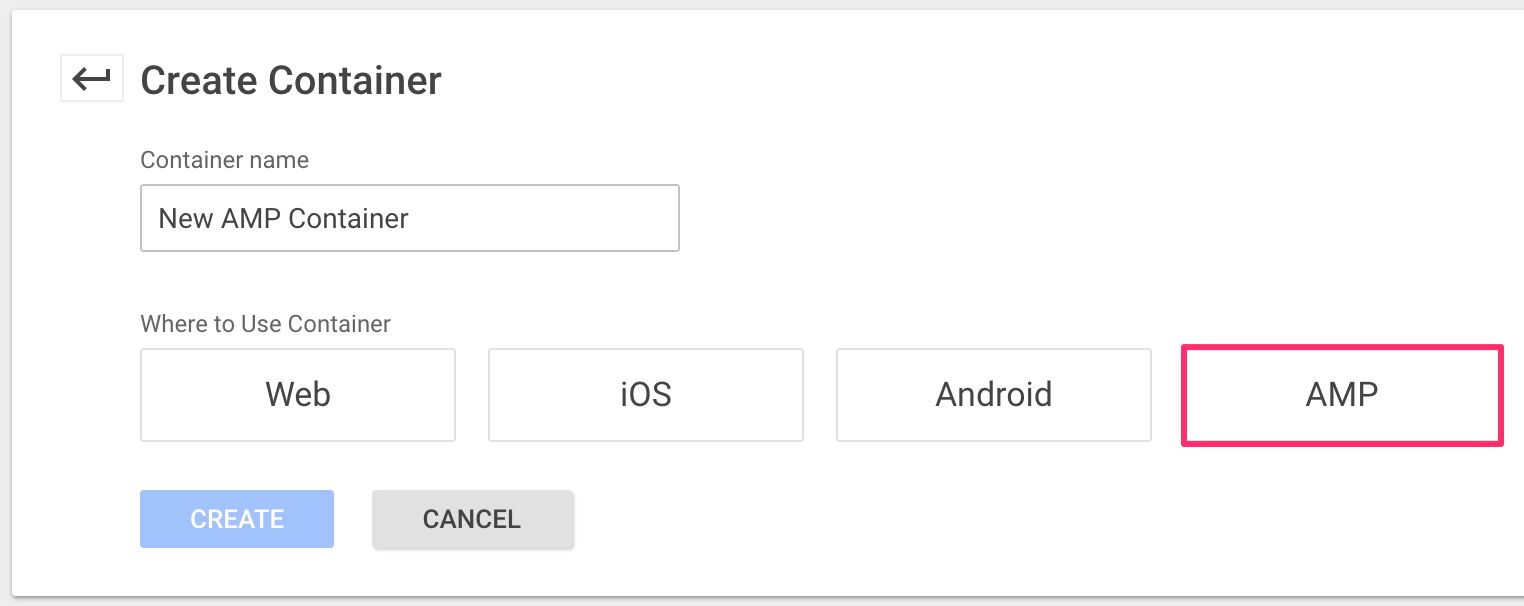
Google Tag Manager recently published support for Accelerated Mobile Pages (AMP). This support comes in the form of a new Container type in Google Tag Manager. When you create an AMP container in GTM, you are actually setting up an external configuration for AMP, which leverages …

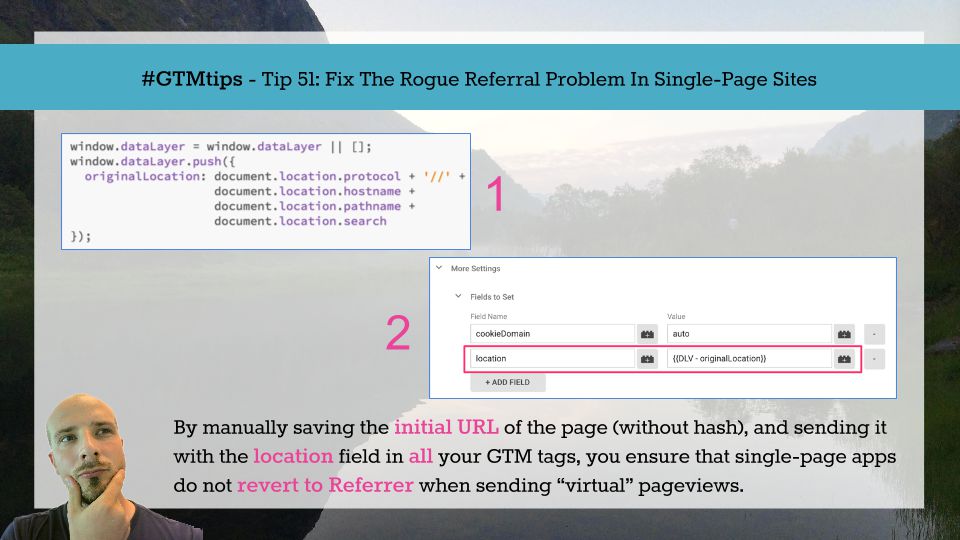
Single-page sites (or single-page apps) typically have just one page load. When navigating the site, subsequent content is either uncovered from the DOM, where it’s been in a hidden state, or loaded from the server using HTTP requests that do not invoke a new page refresh. …

This is a guest post by Stephen Harris from Seer Interactive . He was kind enough to share his awesome solution in this blog, so I’m very grateful indeed for his contribution. If Google Tag Manager is loaded as the primary instrument for tracking on a webpage (as it should …

I’ve already written extensively about JavaScript in web analytics implementation. Suffice to say, understanding at least the basics is absolutely necessary to survive in the technical medium of the web browser. This article expands on a conference talk I gave at …