Trigger Guide for Google Tag Manager

Updated 27 March 2019

In the new version of Google Tag Manager, one of the most visible and profound changes to the previous version is how tags are fired (and blocked). First of all, there’s the obvious terminological distinction: we talk about triggers now, not rules. Second, triggers have become an integral part of the tag creation workflow, and as such have far more significance in the user interface than before.
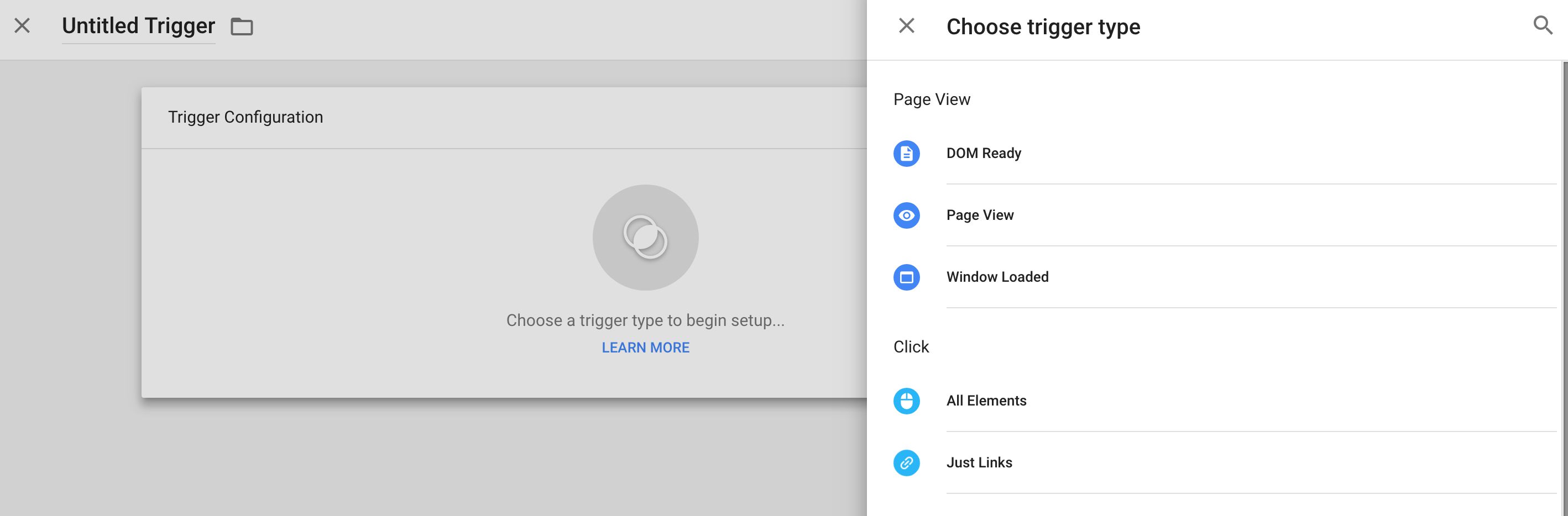
The following text is a standalone article. It’s not an update to the guide I wrote for the previous GTM version: Google Tag Manager: Playing By The Rules, and many of the concepts covered therein are still valid.

Read More…
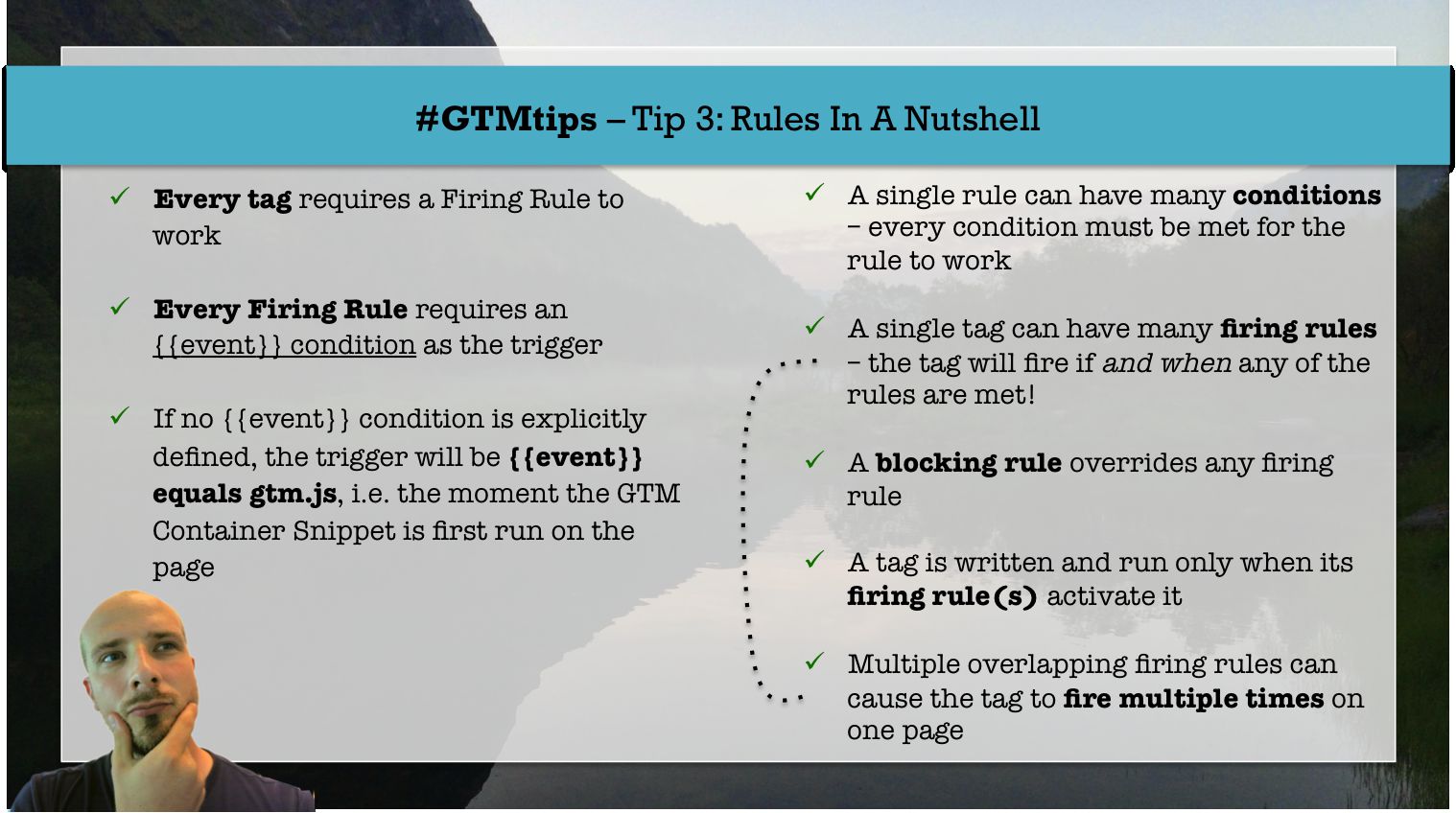
#GTMtips: Rules in a Nutshell

Rules are the cornerstone of Google Tag Manager. As with any critical element in a system, they are easy to get wrong. This tip is just a refresher on how GTM firing and blocking rules work.

Tip 3: Google Tag Manager rules in a nutshell

So, let’s go through these points one-by-one.

Every tag requires a firing rule to work - this is a given. Without a firing rule, your tag will not be written in the document object, and it will never be executed.

Read More…

Google Tag Manager: Playing by the Rules

There is a new version of this guide for GTM V2 here.

(Last updated April 2014) I see Google Tag Manager’s operational model as an analogy of Montesquieu’s three-branched government theory (don’t leave just yet, I’m getting somewhere with this). We have the legislative power of tags (what should be done), the judiciary power of macros (explore the context and circumstance of each tag), and the executive power of rules (make the tag happen). Not one of these would work without the others, so checks and balances are in place as well.

Read More…