Checklist for Optimizing Web Design

In this post, I propose that a combination of valid, accessible, and search engine friendly markup is the perfect recipe for optimal web design.

For markup to be valid, it needs to conform to the guidelines laid out by the “governing body” of HTML standardization: the World Wide Web Consortium, or W3C. While the Internet anxiously waits for HTML5 to shift in status from candidate to recommendation, we’re stuck with ye olde HTML 4.01 standard (est. 1999) as laid out by W3C. Naturally, HTML5 is already widely supported by all the major browsers, and it can (and should) be incorporated in web design without hesitation.

Read More…

Checklist for Optimizing Web Design

In this post, I propose that a combination of valid, accessible, and search engine friendly markup is the perfect recipe for optimal web design.

For markup to be valid, it needs to conform to the guidelines laid out by the “governing body” of HTML standardization: the World Wide Web Consortium, or W3C. While the Internet anxiously waits for HTML5 to shift in status from candidate to recommendation, we’re stuck with ye olde HTML 4.01 standard (est. 1999) as laid out by W3C. Naturally, HTML5 is already widely supported by all the major browsers, and it can (and should) be incorporated in web design without hesitation.

Read More…

Content Strategy: Know Your Audience

For years and years, the one constant in the chaotic world of SEO has been a simple statement: Content is King. This statement has been the cornerstone of content strategy in SEO projects, and its validity has hardly been contested. This is not due to lack of trying. Many posts in the blogosphere have taken an opposing stand (Heidi Cohen: format is king, Carl Ocab: marketing is king, Bernadette Coleman: trust is king). The message of the opposition is this: content cannot be king, as it is only a small part of the audience experience.

Read More…

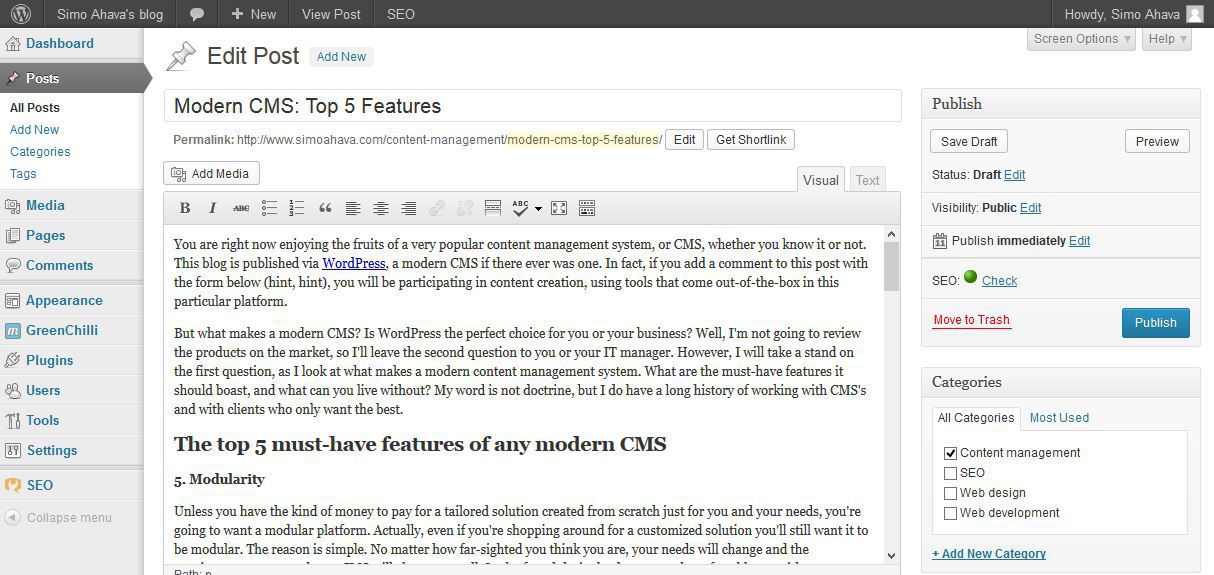
Modern CMS: Top 5 Features

You are right now enjoying the fruits of a very popular content management system, or CMS, whether you know it or not. This blog is published via WordPress, a modern CMS if there ever was one. In fact, if you add a comment to this post with the form below (hint, hint), you will be participating in content creation, using tools that come out-of-the-box in this particular platform.

But what makes a modern CMS? Is WordPress the perfect choice for you or your business? Well, I’m not going to review the products on the market, so I’ll leave the second question to you or your IT manager. However, I will take a stand on the first question, as I look at what makes a modern content management system. What are the must-have features it should boast, and what can you live without? My word is not doctrine, but I do have a long history of working with CMS’s and with clients who only want the best.

Read More…

Search Trends and What They Reveal

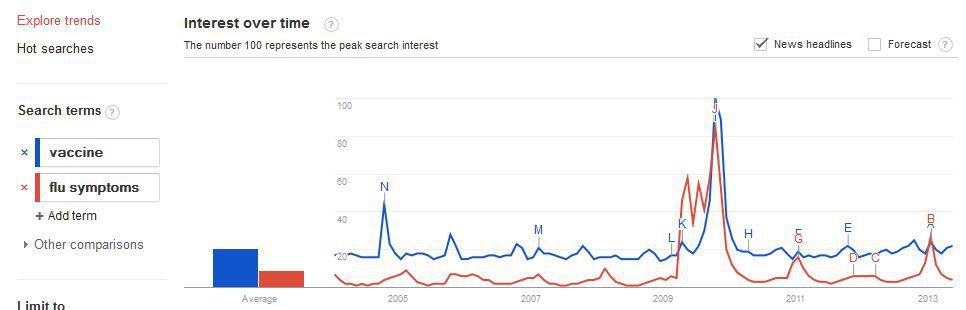
I’m hooked on Google Trends. For example, it probably won’t astound you to learn that whenever search trends peak for flu symptoms, there’s a similar peak for vaccine.

(See also how at some points vaccine comes first and only then do flu symptoms arise. Conspiracy theorists, the ball is in your court!)

Probing this particular case further, I looked at the search trends for swine flu and vaccine. The former peaks in April 2009 and, to my surprise, vaccine actually declines over the following two months. However, it skyrockets during the third peak of the swine flu searches. What does this tell us? I’d like to speculate that people have become resilient to rumors, needing factual confirmation before rushing to the vaccine line. However, one thing is sure: This is a clear incentive for pharmacies and health care stations. What better time to promote their goods than the minute search trends for flu activity begin to gain statistical momentum?

Read More…